Why I rebuilt a budgeting app from scratch (instead of using YNAB or Mint)
When I first entered the workforce back in 2016, I did what any detail-oriented person does: I started tracking my money.
I settled on a lightweight app called Expense Manager. It wasn't a beauty pageant winner by any means, but it was fast, let me create multiple accounts, and had a solid master view that combined all my balances. For a single guy just starting out, it did the job.
But as the years rolled on, my life grew more complex, and my financial tools failed to keep up.
First, I found myself constantly asking a question no basic app could answer: "I'm on day 14 of the month — am I overspending or underspending compared to my historical average? And if I'm over, exactly which category is leaking money right now so I can fix it?"
Then, life accelerated. I relocated to the UAE, which meant managing finances across multiple currencies. I took out a housing loan and wanted to run complex, long-term simulations: "If I pay a lump sum of X next year, or increase my EMI by X%, exactly how many months early will I clear this debt, and how much interest will I save?" No commercial app let me map out those scenarios visually.
Finally, I got married. Suddenly, tracking money wasn't a solo sport anymore. I wanted my wife and me to be entirely aligned on our financial journey, looking at the same live data without friction.
My trusty 2016 app couldn't handle any of this. And when I looked at modern alternatives like YNAB or Mint clones, I found them bloated with credit card ads, overly restrictive, or poorly optimized for collaborative couples.
I realized the tool I actually needed didn't exist. So, over 42 focused development sessions between May and July, I built MyFinCup using React 19, Vite 6, and Supabase.
Here is the exact product philosophy behind how I fixed these personal finance blind spots.
Replacing guesswork with "pace" tracking
Most budgeting apps only tell you what you spent after the damage is done. They show you a retrospective pie chart at the end of the month, when it's too late to change course.
With MyFinCup, I built an intelligent over-pace/under-pace tracking system. At any single point in the month, the app tells us exactly where we stand relative to our historical spending velocity. If we're bleeding cash in a specific category on day 12, the system flags it immediately — this is the actual breakdown from a mid-month check, Food & Dining running 96% over what we'd usually have spent by the same day.
It transitions budgeting from a passive log into an active steering wheel.
Dynamic loan simulations
A mortgage isn't just a static line item; it's a puzzle you want to solve as fast as possible. Instead of using sketchy online calculators or maintaining a messy Excel sheet alongside my budget, I embedded a custom loan simulation engine directly into MyFinCup.
Now I can instantly simulate future financial scenarios — like injecting a lump-sum payment or adjusting monthly EMI — and see the exact interest saved and months shaved off the timeline, right next to the loan itself. On the Toyota Corolla loan here, a lump sum plus an EMI bump pulls the payoff in by three months and saves 34% of the remaining interest.
The "Shared Journey" (aligning with my wife)
Sharing a budget usually means sharing a password or constantly reminding your partner to log their coffee.
MyFinCup introduces a single, unified "Shared Journey" architecture. Through Supabase Row-Level Security, both of us interact with one real-time dashboard. There's no clunky profile switcher. When either of us updates an expense on the go, it reflects instantly on both our phones. It keeps us completely aligned on our long-term goals without the administrative overhead.
The added bonus: built-in bill splitting
Because we wanted a truly all-in-one financial home, I also ported and hardened a dedicated Split tab into the app (originally built for a sibling platform). Why bounce out to Splitwise or type calculations into a WhatsApp chat when your core budgeting app can natively handle household bill-splitting?
Groups support equal or custom-ratio splits, and settling up is computed automatically — no more mental math over who owes what after a trip.
The takeaway
MyFinCup moved from a blank repository to a production Progressive Web App running live on our phone home screens in just 42 sessions. It solves the exact issues I struggled with for a decade: pacing control, cross-currency handling, mortgage optimization, and seamless marital alignment.
Now we know exactly which categories need our focus, our ideal loan repayment plan is mapped out, and my wife and I are completely on track.
In the next post of this series, I'm going to pull back the curtain on the technical side of the "Shared Journey" architecture. I'll break down the exact database schema and the Supabase RLS policies that make it safe and lightning-fast for couples to share a financial dashboard in real time.
More in this series
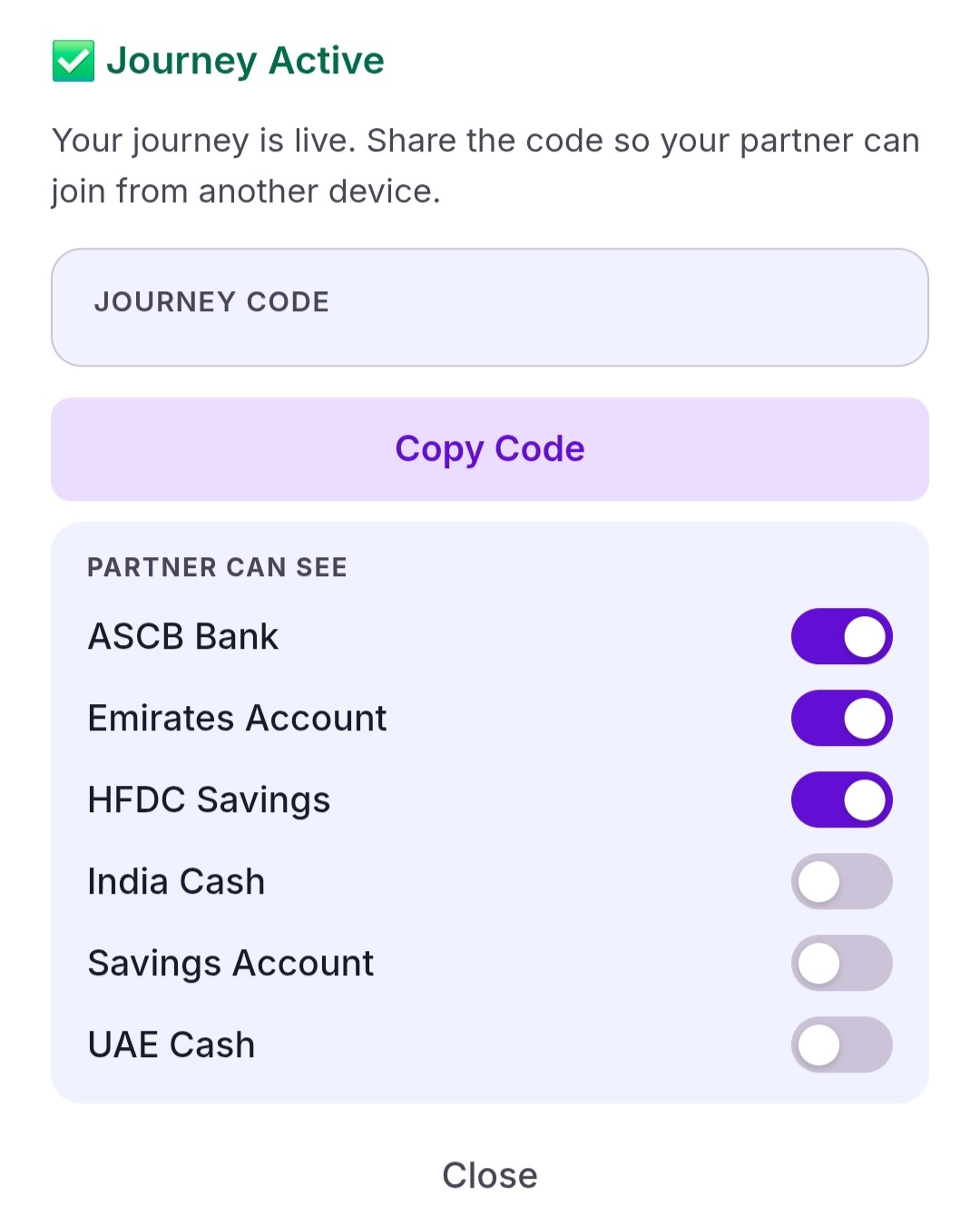
Inside the "Shared Journey": how MyFinCup lets two people trust one dashboard
One dashboard, two people, no mode switcher. How the database — not the app — decides who sees what.
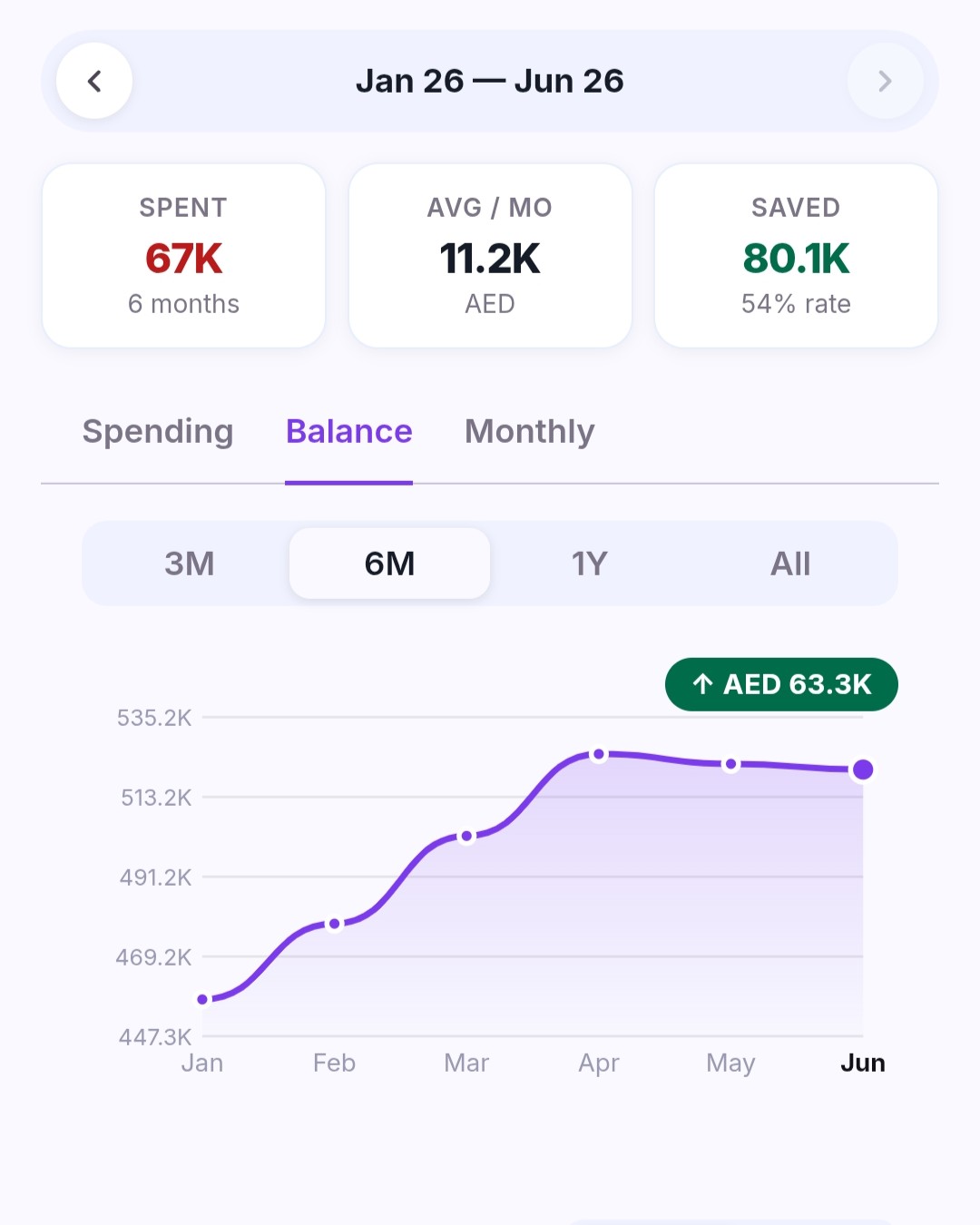
Keeping 40+ AI coding sessions from turning into a Frankenstein app
Color tokens are the easy 20%. Here's what actually kept 43 AI sessions looking like one app.

The 404 that only strangers could see
It worked every time I tested it, and failed for everyone else. Here's why that's not a coincidence.
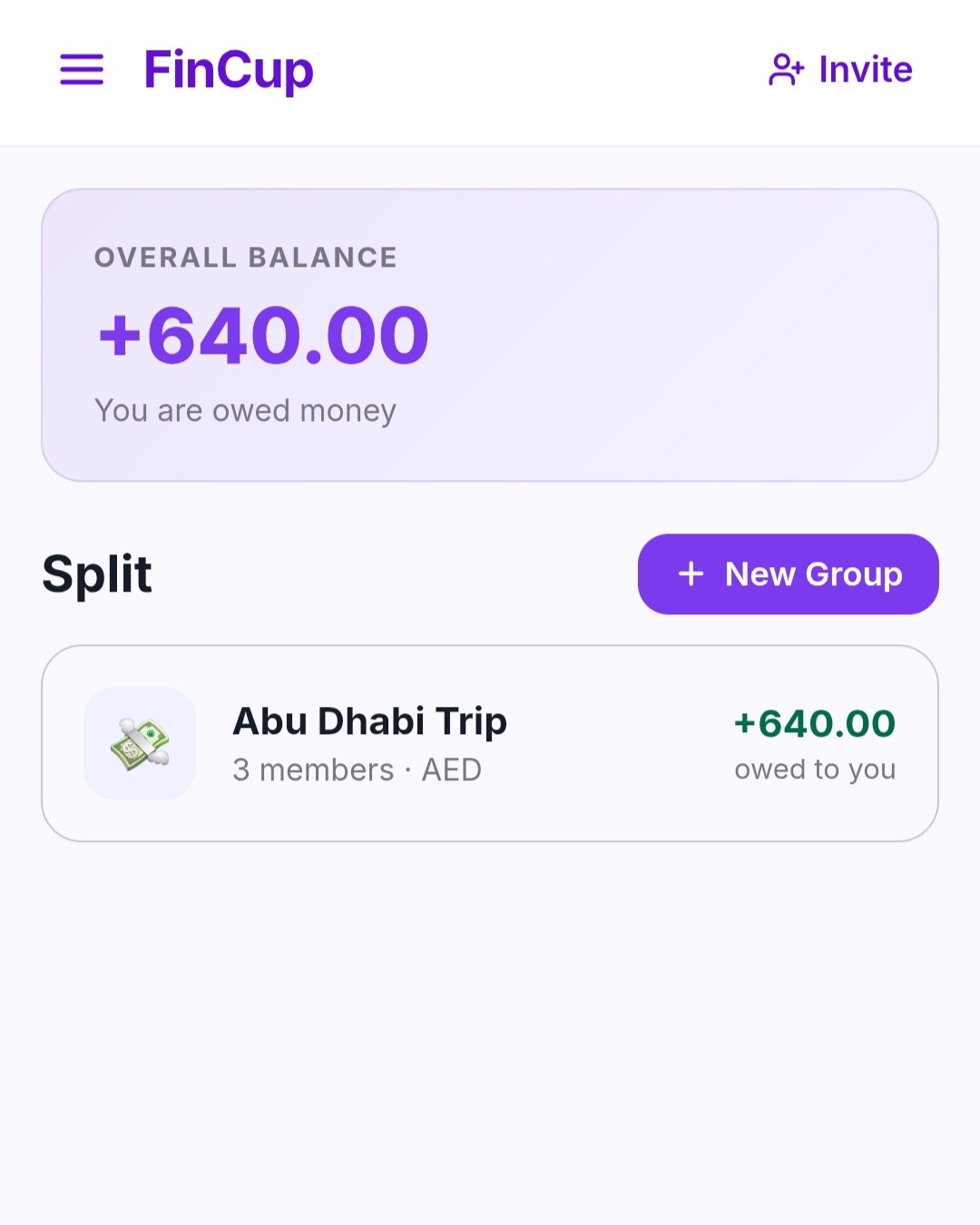
Porting a feature between two apps: what I hardened, what broke anyway
The math was already proven. The lesson from a bug I'd already fixed once didn't come along for the copy-paste.